

Wellness Solutions for Modern Workplaces: A Practical Guide by Ergoworks
Sixty-eight percent of Singaporean workers feel stressed weekly, and 12% experience daily stress. Those numbers translate into real costs: higher turnover, lower output, and rising medical claims. This guide breaks down what a wellness solution looks like in 2026, how to build one, and where ergonomics fits into the picture.
Answering the Big Question: What Is a "Wellness Solution" Today?
A wellness solution is a structured combination of ergonomic workspace design, wellness programs, and workplace policies that protect physical health, mental health, and work life balance. In Singapore and across Asia, the concept has moved well past gym subsidies. Companies now invest in posture support tools, mental wellness resources, flexible working hours, and acoustic privacy for open offices.
Ergoworks operates at the intersection of ergonomic office furniture, AI posture analysis, and corporate wellness delivery. That means the solutions we provide are not abstract; they are chairs, desks, pods, talks, and assessments that employees interact with every workday.
What counts as a workplace wellness solution:
- Ergonomic chairs with lumbar support and adjustable armrests
- Height-adjustable standing desks and mobile workstations
- Acoustic meeting pods for focus work and private calls
- Wellness activities such as stretch clinics, posture workshops, and mindfulness sessions
- Mental wellness talks and confidential counselling access
- Hybrid work policies, wellness leave, and after-hours communication boundaries
Why Workplace Wellness Solutions Matter for Businesses in 2026
Sitting for prolonged periods negatively impacts posture and can lead to chronic pain. Sitting at a desk all day can lead to tight hips and lower back pain. Musculoskeletal disorders are among the most reported workplace injuries. Yet the physical toll is only half the picture.
According to EmploymentHero's Wellness at Work Report 2024, 61% of Singapore employees reported feeling burnt out in the previous three months. MOM's iWorkHealth tool, used by over 15,000 workers in 2024, found that one in three experienced work-related stress or burnout. Happier employees are more productive and engaged; stressed ones cost money.
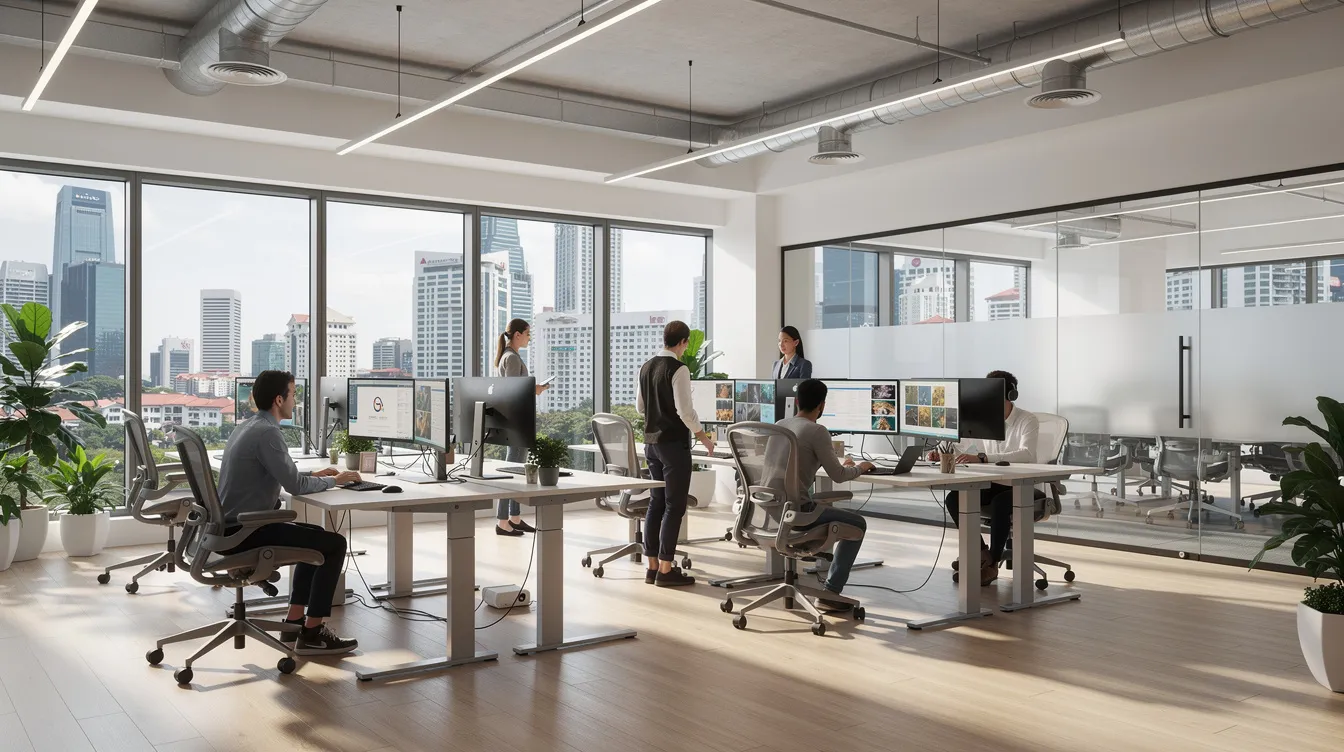
Mental health is now a board-level concern, not a feel-good HR perk. The WTW 2024 Wellbeing Diagnostic found that 50% of employees report above-average stress and 32% report symptoms of anxiety or depression. Wellness programs reduce absenteeism and improve teamwork. Wellness initiatives can reduce absenteeism and improve teamwork. Employers must provide a safe workplace to prevent musculoskeletal disorders.
Common pain points in 2026 offices:
- Chronic back and neck pain from unsupported seating
- Hybrid teams struggling to maintain work life balance across home and office
- Open-plan noise hurting focus and mental recovery
- Younger workers (Gen Z at 68%, Millennials at 65%) reporting burnout at higher rates than older colleagues
Business risks of ignoring wellness:
- Rising medical claims tied to musculoskeletal injuries
- High turnover, especially among workers under 35
- Declining engagement scores and absenteeism spikes
- Reputational damage in a competitive talent market
Core Pillars of a Holistic Wellness Solution
Effective wellness programs rest on pillars that reinforce each other. A standing desk alone does not fix burnout. A meditation app alone does not fix a broken chair. The pillars need to work together.
Ergoworks' ergonomic solutions primarily support the physical health and environment pillars, but we design them to integrate with HR-led wellness initiatives covering mental health, social connection, and policy.
|
Pillar |
What It Covers |
Example |
|---|---|---|
|
Physical health |
Ergonomics, movement, preventive care |
Ergonomic chairs, stretch breaks, health screenings |
|
Mental wellness |
Resilience, stress management, counselling |
EAP access, breathing sessions, resilience workshops |
|
Work life balance |
Time boundaries, flexibility, rest |
Flexible start times, wellness leave, after-hours limits |
|
Social connection |
Team wellness activities, peer support |
Group challenges, mentoring, social lunches |
|
Environment |
Workspace design, acoustics, lighting |
Acoustic pods, monitor arms, natural light layout |
Employee wellbeing is the outcome of all five pillars combined. AIA Singapore's 2025 study found that while 83% of organisations offer wellness programs focused on mental health, only 67% of employees actually use them. That gap points to a design and awareness problem, not a supply problem.
Designing the Physical Workspace: Ergonomics as a Wellness Solution
Office layout and furniture affect the body for 8 to 10 hours a day. Ergonomics helps reduce musculoskeletal disorders in the workplace. Implementing ergonomic principles increases productivity and reduces injury severity.
Proper lumbar support in chairs is essential for maintaining a neutral spine. An ergonomic chair with adjustable armrests, seat depth control, and a recline mechanism keeps the spine in a healthy position throughout the day. Keeping elbows bent at 90 degrees helps maintain a relaxed posture during desk work. Incorporating breathable or cooling fabrics in office wear (and chair mesh) can improve comfort, especially in Singapore's climate.
Using a standing desk can help reduce overall time spent sitting at work. Ergonomic furniture includes adjustable chairs and standing desks; pairing both gives workers the option to alternate postures throughout the day.
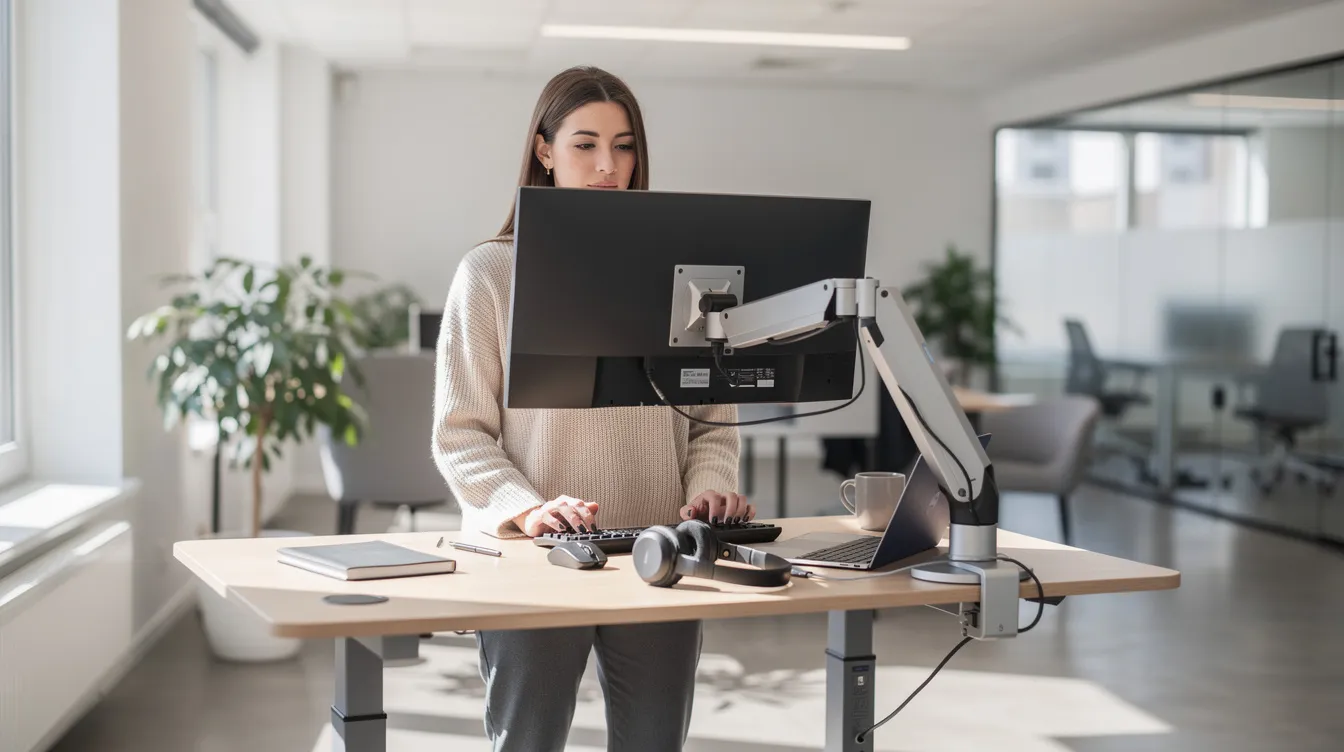
Adjusting your monitor height prevents forward head posture. Monitor arms, footrests, and ergonomic keyboards are fine-tuning accessories that reduce strain on eyes, wrists, and shoulders. Utilizing ergonomic accessories can prevent repetitive strain injuries. Maintaining proper workstation ergonomics is crucial for reducing neck and back pain.
Acoustic pods serve a dual role: they give workers a quiet space for focus tasks or private calls, and they provide a zone for mental decompression away from open-plan noise.
Ergoworks offers end-to-end ergonomic office fit ups, including site assessment, furniture specification, delivery, and free installation as part of a structured wellness solution.
Key physical workspace elements to prioritise:
- Chairs with adjustable lumbar, armrests, and seat depth
- Height-adjustable desks for sit-stand routines
- Monitor arms set at eye level to prevent neck strain
- Acoustic pods for focus and private communication
- Footrests and wrist supports to reduce repetitive strain
Supporting Mental Health and Mental Wellness at Work
Over half of Singaporeans prioritise mental wellness in 2024. The TELUS Mental Health Index found that 47% of Singapore workers feel mentally or physically exhausted at the end of the workday. "Too much work" ranked as the top cause. Healthier SG promotes preventive care for mental health, making awareness and access a national priority.
Monthly wellness talks can provide practical stress management tools. Ergoworks' Ergonomic Talks and roadshows include segments on the mind-body connection, covering how posture affects mood, how micro-breaks reduce stress, and how workspace adjustments support mental well being.
The physical environment matters for mental health too: reduced noise via acoustic pods, access to natural light, and clutter-free workstations all lower cognitive load. Creating psychologically safe spaces means pairing environment with culture.
Guidance for psychologically safe workplaces:
- Train managers to raise awareness about mental health without stigma
- Respect after-hours boundaries; set clear norms on evening messages
- Provide confidential counselling through an EAP that suits your team's cultural context
- Schedule regular sessions for breathing, mindfulness, or guided resilience workshops
- Encourage employees to participate in mental health days without requiring justification
Promoting Movement and Posture Wellness Through Wellness Activities
Physical wellness at a desk involves ergonomics, movement, and hydration. Movement is not a gym membership; it is an everyday wellness activity layered into normal working hours.

Prolonged desk work increases the risk of muscle fatigue and joint stiffness. Short breaks every 30 to 60 minutes can alleviate stiffness and enhance circulation. Regular breaks improve overall focus and productivity. Postural strain from office work can be addressed with both ergonomic adjustments and active recovery.
Set a timer to remind yourself to stand or stretch every hour. Alternate between sitting and standing to reduce fatigue and improve metabolism. Regular movement can prevent muscle locking into postural cramps while working. Incorporating desk stretches can relieve muscle tension throughout the workday. The 20-20-20 rule helps reduce digital eye strain during screen usage: every 20 minutes, look at something 20 feet away for 20 seconds.
Hydration supports spinal discs and joint cartilage health during desk work. Hydration can encourage regular movement breaks when refilling water.
AI posture analysis tools, like the one Ergoworks deploys in corporate campaigns, assess staff posture via video and provide personalized recommendations for exercises and desk adjustments. On-site or virtual posture clinics pair well with Ergonomic Talks to improve posture across your workforce.
Implementable movement-based wellness activities:
- Daily 5-minute stretch breaks at scheduled intervals
- Walking meetings for one-on-one or small-team discussions
- Sit-stand desk routines (30-45 minutes seated, 15 minutes standing)
- Step challenges tracked via wearables or phone apps (a fun, engaging format for teams)
- On-site posture clinics with AI assessment and shoulder/neck mobility demos
- Hydration reminders paired with refill-station walks
- Sports or movement clubs that run weekly (even 20 minutes of group activity builds community)
Work Life Balance Policies as Strategic Wellness Solutions
Work life balance in practical terms means realistic workloads, clear priorities, protected focus time, and predictable rest. Flexible working hours can reduce employee stress. Flexible working hours can boost job satisfaction and reduce stress. Wellness leave promotes mental and physical health.
Policy levers that companies in Singapore are adopting:
- Flexible start and end times
- Hybrid work schedules with defined in-office and remote days
- After-hours messaging norms (no work messages after 7 p.m., for example)
- Caregiving support and dedicated wellness leave
- Compressed work weeks where feasible
The Gallup 2026 Singapore Workplace Report confirms that flexible work arrangements are now widely offered, but employees rate their employer's ability to prevent work overload lower than expected. Policies only work when managers model the behaviour: taking leave, using ergonomic setups themselves, and respecting boundaries.
Singapore's Tripartite Advisory on Mental Health and Well-being at Workplaces already recommends flexible arrangements and after-hours communication policies. Forward-looking companies treat these as growth investments, not compliance checklists.
Building a Structured Corporate Wellness Program with Ergoworks
Ad hoc wellness activities are less effective than a planned program with clear goals, timelines, and measurement. Effective wellness programs require intentional planning and communication. Employing professional ergonomic advisory services enhances workplace wellness initiatives.
Ergoworks partners with HR and management through a phased process:
- Diagnose: Run employee surveys on physical discomfort and mental well being. Conduct a workspace audit. Use AI posture analysis to establish baseline data and participation numbers.
- Design: Select furniture upgrades (tailored to each team's space), schedule Ergonomic Talks, and identify policy adjustments. This is the first step toward a measurable program.
- Deliver: Install ergonomic furniture with free installation and logistics support. Run roadshows at your office or online, with practical exercises, product demonstrations, and photos for internal comms. Bulk procurement catalogues simplify the process for large rollouts.
- Review: Collect feedback, measure outcomes against baseline, and adjust the program for the next cycle. Dedication to iteration is what separates a one-off event from lasting development.
WSH compliance advisory, bulk corporate catalogues, and end-to-end logistics are operational enablers that remove friction for HR teams managing large-scale wellness rollouts.
Measuring the Impact of Wellness Solutions
Leadership buy-in depends on data. Budget justification depends on data. Continuous improvement depends on data.
Metrics to track:
- Absenteeism rates before and after ergonomic interventions
- Musculoskeletal-related medical claims (compare year-over-year)
- Employee satisfaction and engagement scores via pulse surveys
- Usage rates of wellness activities, mental health apps, and EAPs
- Posture score improvements from AI posture analysis (pre- vs. post-installation)
- Qualitative feedback on comfort, stress, and effectiveness of programs
A global technology company using Briotix Health's ergonomic self-assessment tools saw 91% of ergonomic issues resolved via self-help, with only 9% needing professional support, saving USD 1.1 million in one year. Before-after comparisons of ergonomic chair adoption at your own company can demonstrate similar risk reduction through fewer complaints of back or neck pain.
Ergoworks supports pre-installation assessments and post-project reviews as part of long-term corporate wellness partnerships, helping you measure success without overwhelming your HR team.
Getting Started: Practical Next Steps for Your Organisation
Do not wait for the perfect time to launch wellness solutions. Start with what you can control this quarter. A small, well-executed pilot builds the skills and evidence needed to scale.
Visit the Ergoworks corporate showroom at Marina Square, 6 Raffles Boulevard, #03-140/141, Singapore 039594, open daily 11:30 a.m. to 9:00 p.m., or call 6837 3370 to schedule a corporate consultation. Bring your facilities team. Test the chairs. Ask about the construction of the standing desks. See the acoustic pods in person.
Align your wellness programs with broader business objectives so that wellness becomes a long-term advantage for your families of employees, not a quarterly checkbox.
Your first three moves this quarter:
- Audit: Walk your office floor. Note which chairs lack lumbar support, which desks are fixed-height, and where noise is highest.
- Educate: Book an introductory Ergonomic Talk with Ergoworks to raise awareness about posture, movement, and micro-breaks.
- Pilot: Launch one wellness activity (e.g., daily stretch breaks or a sit-stand desk trial for one team) and track participation numbers and comfort feedback for 30 days.