

Sleeping Pods in Singapore: Where to Nap, Work & Recharge
Singapore never really switches off. Between red-eye flights through Changi Airport and the post-lunch energy dip hitting offices around City Hall, the demand for a quick nap has turned sleeping pods into a genuine part of daily life across the island.
Quick Guide: Best Sleeping Pod Options in Singapore
If you're short on time, here's a fast-answer overview of the main places to rest, sleep, and recharge across Singapore.
- Changi Airport – Changi Lounge (Jewel): Sleeping pods starting at S$22 for 1 hour; reclining shell design with privacy visor and built-in timer.
- Changi Airport – Ambassador Transit Lounge (T2/T3): Nap suites with real beds and showers; around S$68 for 3 hours of lounge use or S$145 for a 6-hour block.
- Changi Airport – Free Snooze Lounges: Reclining chairs in transit halls, no charge, open 24 hours - though they can get crowded overnight.
- City nap studios and capsule hotels: Day-use hotel rooms in areas like Orchard and Bugis from roughly S$45–100 for several hours; dedicated nap studios near MRT nodes offer 45–60 minute sessions.
- Workplace sleeping pods (Ergoworks): The IGLOOO Pod and POWERNAP series are designed for offices, wellness rooms, and healthcare facilities across Singapore.
Options for daytime napping vary by location and accessibility - transit passengers, office workers, and shift staff all have different needs. Best fit by profile:
- Transit passengers at Changi: Changi Lounge pods or Ambassador Transit Lounge suites.
- Office workers near City Hall or Bugis: City nap studios, short-stay hotels, or in-office pods.
- Companies wanting in-office recovery pods: Ergoworks supports businesses and organisations in Singapore with ergonomic sleeping pods for offices and wellness rooms.
- Why Sleeping Pods Are Growing in Singapore
Singapore's workforce regularly logs some of the longest working hours in Asia. Add a dense CBD where thousands commute daily, plus Changi Airport's role as a 24/7 transit hub, and you have a city where the afternoon energy dip is practically a national experience.
Sleeping pods differ from traditional hotel rooms or simple nap rooms. They're compact, ergonomically shaped shells intended for 20–90 minute rest sessions - not overnight stays. The focus is on rapid recovery: sound isolation, privacy, controlled lighting, and neutral spinal support rather than full bedroom amenities.
Common user groups include office workers near City Hall and Marina Bay, students, shift workers in healthcare, and travellers transiting at Changi Airport. Research from NUS's Yong Loo Lin School of Medicine found that a 30-minute nap offers the best trade-off between cognitive benefit and practicality, with minimal grogginess. Separately, a Warwick-MIT-Harvard study showed roughly 2.3% productivity gains when workers had access to quiet afternoon naps.
Sleeping pods sit within a broader workplace wellness and ergonomic design trend - one that Ergoworks specialises in, connecting ergonomic chairs, standing desks, and acoustic meeting pods into a single ecosystem for employee well-being.
Airport Sleeping Pods at Singapore Changi Airport
Most sleeping pods at Changi Airport are located inside pay-per-use lounges rather than scattered across the departure transit hall. If you're expecting open-access capsules near your gate, you'll need to adjust your expectations - the real pod experiences are behind lounge doors.
A quick layout primer: Terminals 1, 2, and 3 are connected airside, while Terminal 4 requires a shuttle. Jewel Changi Airport sits landside, meaning transit passengers need to clear immigration to access it. Most pod and lounge options sit in or near the departure transit hall south and across terminal concourses.
Key nap options at the airport:
- Changi Lounge in Jewel: Dedicated sleeping pods with reclining shells and privacy visors.
- Ambassador Transit Lounge (T2/T3): Private nap suites with single beds and showers.
- Plaza Premium Lounge (T1): Resting suites with comfortable beds and separate shower areas.
- Blossom Lounge (T4): Relaxation zones with massage chairs and privacy curtains.
- YOTELAIR (Jewel): A micro-hotel with adjustable beds, mood lighting, and pay-by-the-hour rooms.
Most paid options include free wifi, shower facilities, and food and drinks depending on the package - making them ideal for long layovers or when you need to catch a delayed flight. Free alternatives like snooze lounges exist in transit areas, but they offer reclining chairs rather than private sleeping pods and tend to get crowded overnight.
Changi Lounge & Other Paid Pod Options at Jewel
Jewel Changi Airport has become the main hub for modern sleeping pod and micro-hotel experiences at Changi. Its mix of retail, dining, and the sunflower garden draws visitors, but the rest facilities on Level 1 are what matter for tired travellers.
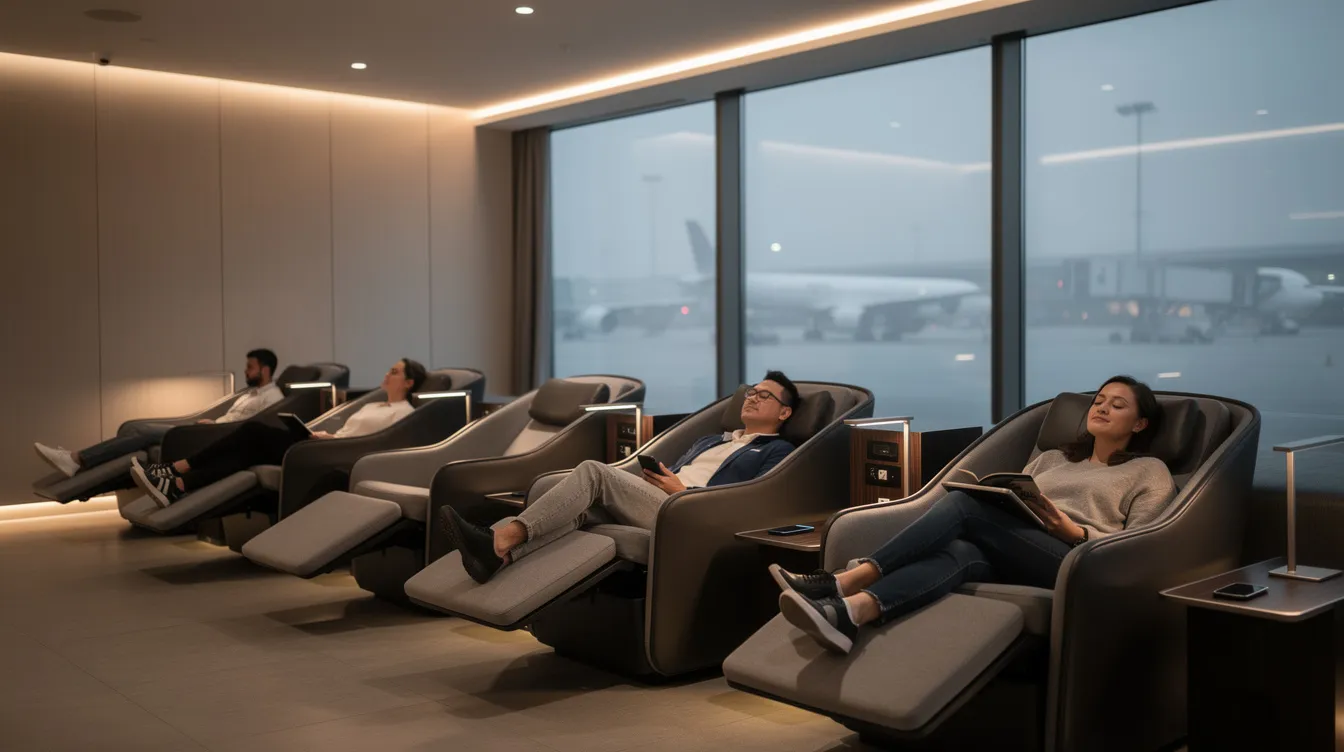
Sleeping pods are located in Jewel Changi Airport's Changi Lounge. These are EnergyPod-style units featuring a reclining shell, privacy visor, and built-in timer - designed specifically for powernaps rather than extended sleep. Changi Lounge offers sleeping pods starting at S$22 for 1 hour, separate from general lounge entry. Reservations are recommended during busy travel seasons and holiday periods, when pods fill quickly.
Inside the lounge, amenities complement pod usage: free wifi, shower facilities, charging points, light refreshments, and quiet work areas where you can sit and catch up on emails before your flight.
YOTELAIR, also in Jewel, offers an alternative for travellers who want more space than a pod but less cost than a full hotel stay. Compact rooms come with adjustable beds, mood lighting, and a private bathroom - bookable for blocks as short as four hours. It's conveniently located for anyone who has cleared immigration and wants a proper bed.
Sleeping & Nap Suites in Changi Airport Lounges
Many travellers at Changi use lounge-based nap suites as a practical alternative to capsule-style pods. These suites provide a tranquil space with real beds, proper bedding, and privacy - closer to a bedroom experience than a reclining chair.
Plaza Premium Lounge (Terminal 1): Located near Gate C1, this lounge has private resting suites with comfortable beds and separate shower areas. Plaza Premium Lounge has resting suites available for S$55 for 3 hours of access - a solid option when you need quiet, hotel-like comfort between flights. Free cancellation policies vary by booking channel, so check terms before you pay.
Ambassador Transit Lounge (Terminals 2 and 3): This lounge offers hourly napping suites with single beds, showers, and toiletries. Ambassador Transit Lounge charges S$68 for 3 hours of lounge use, while longer blocks run to S$145 for 6 hours. Bundles that combine sleep, shower, and lounge access let you extend your rest without worrying about add-on fees. Private check in ensures minimal disruption.
Blossom Lounge (Terminal 4): Rather than fully enclosed suites, Blossom Lounge provides relaxation zones with reclining massage chairs and privacy curtains that simulate pod-like separation. Standard lounge amenities - wifi, snacks, drinks - are included.
General booking pattern: travellers pay for lounge entry via cash, eligible cards, or memberships, then add fees for a private nap suite or pod-style zone as needed.
Free Snooze Lounges and Budget Sleeping Options at Changi
Snooze lounges at Singapore Airport are free and open to the public - making them the go-to choice for budget-conscious travellers who need a few hours of rest between flights without spending money.
These snooze lounges consist of rows of reclining chairs in quieter corners of the departure transit hall, with some areas dimmed at night. They're functional for a quick nap, but they offer far less privacy than full sleeping pods and can feel crowded during peak overnight hours. You're not supposed to reserve seats, so early arrival improves your chances.
Other free or very low-cost rest spots include:
- Cushioned benches and carpeted floor areas near quieter gates
- Movie theatre seating in Terminal 3 that some travellers use for short naps (lol, it works)
- Shower-only facilities in select terminals for around S$5
Compared to paid pod and lounge options, free spots fall short on privacy, noise control, lighting, shower access, and the ability to work using secure wifi and power sockets. If you're on a tight budget for your trip, they'll do - but for genuine rest, paid options deliver more.
City Nap Pods, Short-Stay Rooms & Napping Near City Hall
Not all naps in Singapore happen at the airport. Many people look for city-centre options to relax and unwind between client meetings, classes, or a long afternoon.
Day-use hotel rooms in Singapore offer naps for 1–6 hours, with properties in City Hall, Bugis, Marina Bay, and Orchard catering to professionals and visitors alike. Prices typically range from S$45–100 depending on location and amenities. Affordable capsule hotels also provide short-stay options across the city for those on a budget.
Dedicated nap and relaxation studios have popped up near major MRT nodes. CosyCorner.sg offers soundproofed rooms for distraction-free naps, while Yunomori Onsen & Spa provides communal rest areas for relaxation. Affordable nap pods are available near Changi Airport and Orchard as well. Some providers let you discover and book nap pods via an interactive map on their website, adding convenience to the process. Sessions typically last 45–60 minutes and include eye masks, earplugs, and lockers.
These city options usually provide air-conditioning, free wifi, and accessible locations near transit. The key difference: consumer-facing nap services are book-by-session, while corporate in-office sleeping pods are owned by organisations for their own staff - a curated selection of furniture intended for daily use rather than one-off visits.
Workplace Sleeping Pods in Singapore Offices (Ergoworks Focus)
In-office sleeping pods represent a new layer of corporate wellness, especially in sectors with long or unpredictable hours - finance, tech, legal, healthcare, and contact centres. Companies like Wise and DBS have already introduced nap rooms and wellness spaces into their Singapore offices.
Affordable sleeping pods for office breaks are rare in Singapore, which is precisely why purpose-built solutions matter. Organisations use sleeping pods in wellness rooms, sick bays, mother's rooms, and focus zones to let employees take 20–30 minute powernaps without leaving the building. A quiet place to rest and wake refreshed can make a measurable difference to afternoon performance.
Ergoworks is a specialist in ergonomic workplace solutions, and our sleeping pods integrate with standing desks, ergonomic chairs, monitor arms, and acoustic pods to create a holistic wellness ecosystem. Corporate wellness initiatives can be supported by ergonomic office furniture that addresses both active working posture and recovery.
Key benefits for organisations:
- Reduced fatigue and presenteeism
- Higher afternoon productivity and fewer errors
- Improved morale, retention, and family-friendly policies
- Better utilisation of office space via compact pod footprints
Ergoworks supports B2B customers with end-to-end services: site consultation, Ai-driven posture and usage advisory, WSH-compliant layouts, delivery, installation, and ongoing support.
Ergoworks Sleeping Pod Collection: IGLOOO & POWERNAP Series
Ergoworks offers a curated sleeping pod collection purpose-built for Singapore workplaces and wellness spaces. Here's what's available:
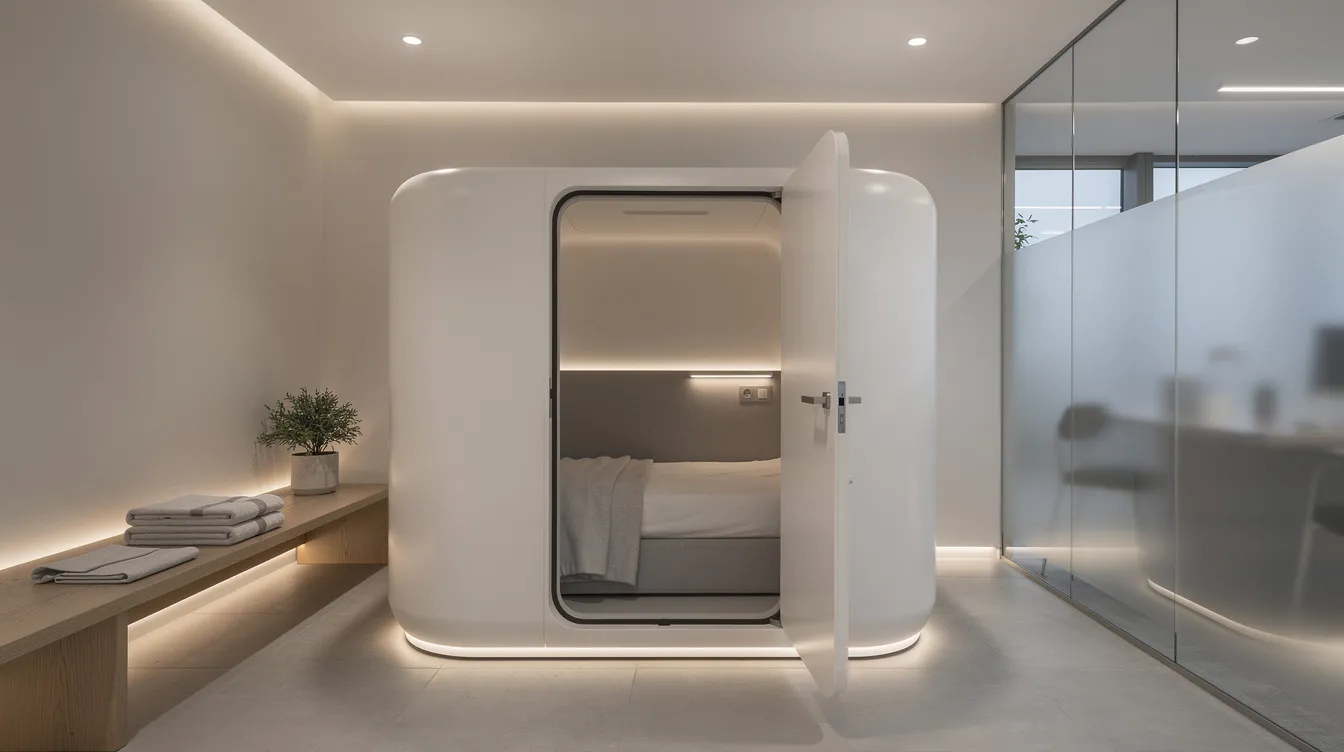
IGLOOO Pod: A semi-enclosed capsule ideal for quiet powernaps and focused breaks. It features integrated lighting, acoustic dampening, ventilation, a fold-out work surface, under-seat storage, and USB charging. Its compact footprint suits open-plan offices, libraries, and co-working spaces. Manufactured in Finland with a typical lead time of 4–6 weeks.
POWERNAP Pod – Recovery: A fully reclining model built for rapid restoration. Ergonomic cushioning with head and lumbar support keeps spinal alignment neutral during short naps - super comfy for a 20-minute reset.
POWERNAP Pod – Recliner: A chaise-lounge style pod with partial enclosure, designed for short rests, reading, and decompression between meetings. Optional power sockets and device charging keep you connected.
POWERNAP Pod – Flatbed: The closest to a traditional bed - a flat surface with full-body support, ideal for wellness rooms where staff need longer rest during night shift recovery or on-call periods.
Across the range, all pods feature durable finishes suited to high-traffic corporate environments, built-in power and USB charging, and upholstery choices that can match company branding. Ergonomic office solutions like these can enhance workplace productivity and employee wellness when integrated thoughtfully into office design.

Choosing the Right Sleeping Pod for Your Workplace
This section is a practical guide for HR, facilities, and workplace design teams planning to add sleeping pods to their Singapore office.
Key factors to evaluate:
- Available floor area and ceiling height
- Privacy needs and expected usage volume
- Whether the pod sits in an open office, wellness room, gym area, or executive suite
- Noise from nearby corridors or collaboration zones
Matching pod type to use case:
|
Use Case |
Recommended Pod |
Why |
|---|---|---|
|
Mixed focus-and-nap zones |
IGLOOO |
Work surface + rest in one unit |
|
Short breaks near collaboration areas |
POWERNAP Recliner |
Quick, convenient decompression |
|
Fatigue-heavy teams (finance, healthcare) |
POWERNAP Recovery |
Deeper ergonomic recline |
|
Night shift or on-call staff |
POWERNAP Flatbed |
Full horizontal rest |
Acoustic and lighting considerations matter: select pods with sound-dampening structures, warm dimmable lighting, and position them away from high-traffic corridors to create a helpful retreat.
Involve stakeholders - HR, IT, safety officers - early. Ai posture analysis can assist in ergonomic office setup, and Ergoworks' corporate space-planning support provides evidence-based guidance on pod placement and broader office interior design.
How to Get Started with Ergoworks Sleeping Pods in Singapore
Ready to explore sleeping pods for your organisation? Here's a simple path forward.
- Initial consultation (online or on-site) to understand team size, workflows, and space constraints.
- Proposal of 1–2 pod models with layout options tailored to your office.
- Pilot zone - start with a small installation before a larger rollout to gather employee feedback.
Ergoworks can coordinate with designers or renovation contractors to integrate pods alongside ergonomic chairs, standing desks, and acoustic phone booths in a cohesive workplace design. Bulk procurement support, corporate catalogues, free local delivery and installation in Singapore, and after-sales service for pod maintenance are all part of the package.
Whether you're an enterprise, school, hospital, or government agency, visit the Ergoworks corporate sleeping pods page or reach out to our sales team to book a consultation. The right pod can turn an underused corner of your office into the most popular space in the building.